
ARVIN SKIN HOSPITAL · SKIN & HAIR HEALTH
In this article
- Warts: Types and Effective Removal Methods
- What Are Warts?
- Are Warts Contagious?
- Common Types of Warts
- Causes and Risk Factors
- Effective Wart Removal Methods
- Benefits:
- Home Care Tips
- How Long Does Treatment Take?
- Common Mistakes
- Can Warts Go Away on Their Own?
- Frequently Asked Questions (FAQ)
- When to See a Dermatologist
- Conclusion
Warts: Types and Effective Removal Methods
Warts are common skin growths caused by a viral infection of the skin. Although they are usually harmless, they can be uncomfortable, spread to other areas, and affect appearance. This guide explains the types of warts and the most effective methods for removal and treatment.
What Are Warts?
Warts are small skin growths caused by the Human Papillomavirus (HPV). The virus enters the skin through tiny cuts or damaged areas.
Common Characteristics:
- Rough or raised bumps
- Skin-colored or darker lesions
- May appear alone or in groups
Are Warts Contagious?
Yes. Warts can spread through:
- Direct skin contact
- Shared personal items
- Touching or scratching the wart
Good hygiene helps reduce transmission.
Common Types of Warts
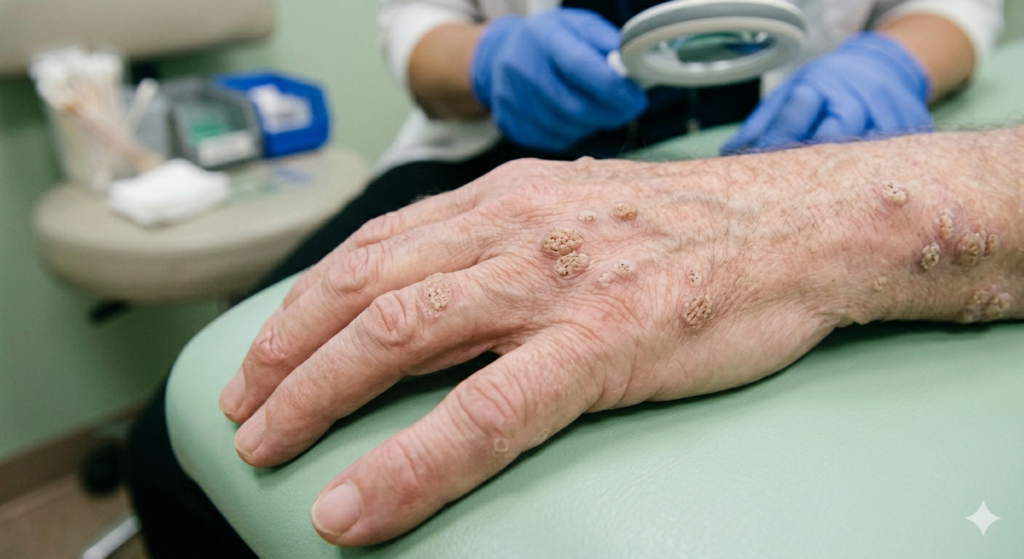
1. Common Warts (Verruca Vulgaris)
- Usually appear on fingers and hands
- Rough surface
- Small black dots may be visible
2. Plantar Warts
- Develop on the soles of the feet
- May be painful when walking
- Often grow inward due to pressure
3. Flat Warts
- Small and smooth
- Often appear on face or legs
- More common in children and young adults
4. Filiform Warts
- Long, narrow growths
- Common around the mouth, nose, or eyes
5. Genital Warts
- Appear in the genital area
- Sexually transmitted
- Require medical evaluation and treatment
Causes and Risk Factors
- Direct contact with HPV
- Weak immune system
- Skin injuries or cuts
- Walking barefoot in public places
Effective Wart Removal Methods
1. Salicylic Acid Treatments
- Gradually removes wart tissue
- Available as creams or solutions
Best for small common warts.
2. Cryotherapy (Freezing)
A dermatologist freezes the wart using liquid nitrogen.
Benefits:
- Quick and effective
- Commonly used for many wart types
3. Laser Treatment
- Destroys wart tissue using focused light energy
- Useful for resistant or multiple warts
4. Electrocautery
- Burns and removes the wart
- Often combined with curettage
5. Minor Surgical Removal
Used for stubborn or large warts.
Home Care Tips
- Do not pick or scratch warts
- Keep the area clean and dry
- Avoid sharing towels or razors
- Wash hands after touching warts
How Long Does Treatment Take?
- Small warts: a few weeks
- Resistant warts: several months
Some warts may require repeated treatments.
Common Mistakes
- Cutting warts at home
- Ignoring spreading lesions
- Sharing personal items
- Stopping treatment too early
Can Warts Go Away on Their Own?
Yes, some warts disappear naturally as the immune system clears the virus. However, treatment is often needed for:
- Painful warts
- Spreading lesions
- Cosmetic concerns
Frequently Asked Questions (FAQ)
Are warts dangerous?
Most are harmless, but genital warts require medical evaluation.
Can warts come back after treatment?
Yes, recurrence is possible because the virus may remain in the skin.
Is wart removal painful?
Most treatments cause only mild discomfort.
When to See a Dermatologist
Consult a specialist if:
- Warts are painful or spreading
- Home treatment fails
- Lesions appear on the face or genital area
Conclusion
Warts are common viral skin growths that can be effectively treated with modern dermatological methods. Early treatment helps prevent spreading and improves treatment success.
Book a Consultation
If you have persistent or spreading warts, a dermatologist can recommend the safest and most effective removal method based on the type and location of the wart.
Let’s talk about your skin
Contact our reception team to arrange a consultation or ask about our services.
This article provides general information and does not replace a medical consultation.